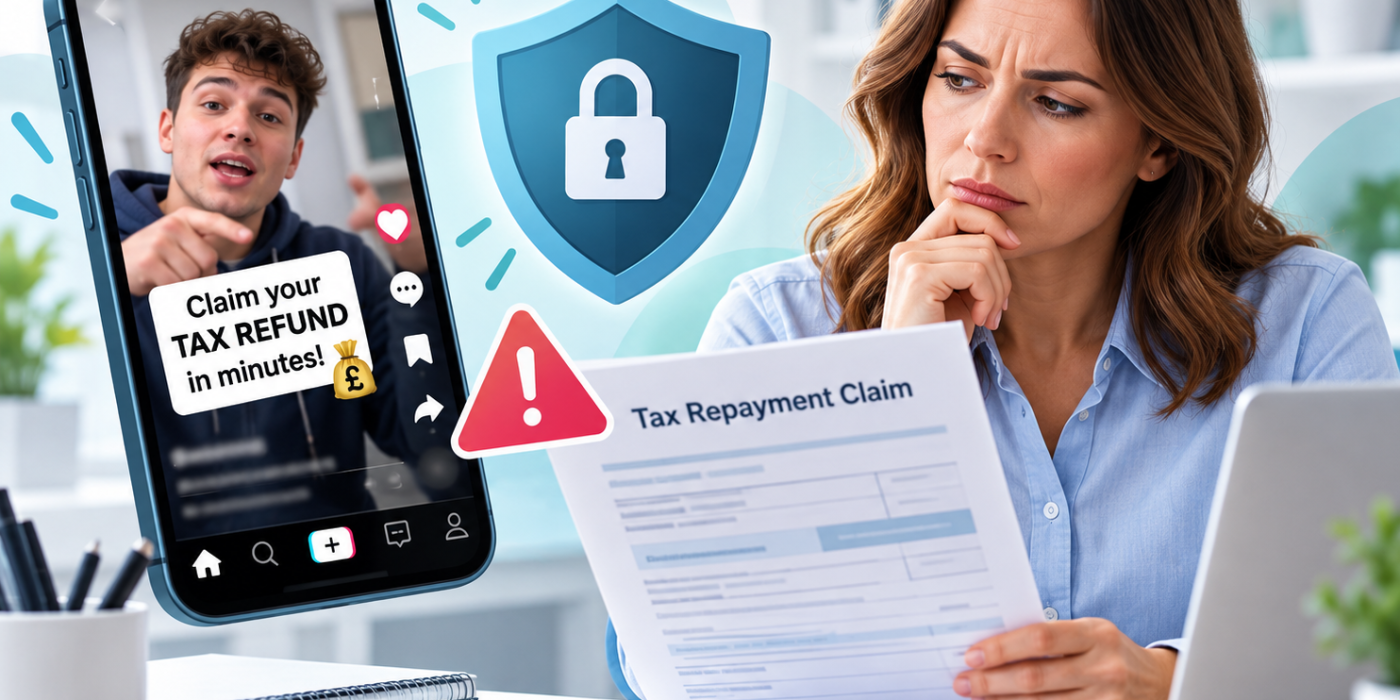
£153 Million in Fraudulent Tax Claims Blocked: HMRC’s Warning About TikTok Tax Scams
HMRC has revealed it blocked around £153 million in suspected fraudulent tax repayment claims tied to a scheme allegedly promoted through TikTok, with two suspects arrested in East London as part of the investigation. It’s a striking figure, and a useful prompt to remind staff how these scams typically work, because payroll is very often where the fallout lands first.
How the scheme is said to have worked
According to HMRC, the individuals behind the scheme used social media posts to target UK taxpayers, presenting what looked like “risk free” financial opportunities. In practice, this appears to have involved persuading people to hand over personal tax information, which was then used to submit fraudulent repayment claims in their name, sometimes without the individual fully understanding what they’d agreed to.
HMRC’s warning to taxpayers
HMRC has been direct about this: it will never use social media to offer tax rebates or request personal or financial information. Any approach along those lines, however convincing the account or video looks, should be treated as suspicious. HMRC is also warning people against sharing login details for their Personal Tax Account or the HMRC app with anyone, since doing so exposes them to identity theft and, worse, potential liability for fraudulent claims made using their own credentials.
Why this matters for employers
Payroll teams tend to be a natural, trusted point of contact when an employee sees something online that mentions tax refunds and isn’t sure whether it’s legitimate. Being able to say clearly “HMRC will never contact you about a refund through social media” is a simple, useful thing to be able to tell staff with confidence.
There’s also a wider point about credential hygiene. The same instinct that leads someone to hand over their Personal Tax Account login to a stranger online can just as easily apply to payslip portals, pension platforms or other systems tied to their pay. Treating any login connected to tax or pay with the same caution as online banking is a habit worth actively encouraging.
What to tell your staff
- HMRC will never use social media, text message or an unsolicited phone call to offer a tax rebate.
- Never share Personal Tax Account, HMRC app or Government Gateway login details with anyone, including someone claiming to help with a refund.
- If something looks suspicious, forward it to HMRC’s phishing team at phishing@hmrc.gov.uk rather than clicking through.
- Genuine tax fraud can be reported directly via GOV.UK.
How Pecunia Pro can help
We can put together a short, ready-to-share staff briefing on spotting and avoiding these scams, and we’re always available as a sense-check if an employee brings you something that looks off. Protecting your team’s Government Gateway and payroll-related logins is protecting your own payroll data too.
Want help getting ahead of this? Call us on 020 8143 1529 or email info@pecuniapro.co.uk and we’ll talk it through.